
C A N N O P Y
Art is True North


Coming Up for Air

Roufaida
INTERVIEW — With her debut album, Roufaida transforms cultural inheritance into a living, flexible practice of self-expression
Words by Keena Alwahaidi | Illustration by Dane Thibeault
ISSUE 16 | ROTTERDAM | ALT.ITUDE
To describe Roufaida simply as a singer-songwriter would overlook the depth of her music, a storied and complex legacy of diasporic identity. The Dutch-Moroccan singer’s debut album Coming Up for Air encompasses that and more—a poetic exploration of her North African roots, while also challenging what social consciousness means at the intersection of heritage and self-expression. Few musical works capture such a rich sense of identity, tied to the textured, often rocky awareness of the past and belonging.
Roufaida's work never seeks to separate her own identity from politics, making art as activism a vital mode of expression. Her writing is riddled with love. And to write on love, how could one avoid the burden of occupation, which haunts every aspect of life and ruptures how we view and engage with art forever? As vital frameworks, art and life are inextricably intertwined, mimicking each other, and in the face of colonial violence, neither should find comfort in a neutral state. The seeming simplicity of her music reveals a stark truth: colonialism pervades almost every international industry, including her own.
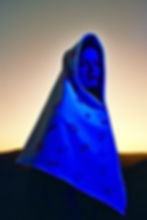
While advocating for Palestine might inspire in her — and others in the same position ─ an empowering stance, it doesn’t come from power itself but from the act of resisting. The freedom that comes from living and breathing at the margins. However, what is the essence of making art produced as activism first, and art second? To disturb the order of things is to pose activism as the vessel, carrying art within it. It risks myriad misdirected outcomes—outcomes Roufaida deliberately resists. Her music is about love and longing, but that in itself is political.
Activism doesn’t consume or overtake Roufaida’s artistic expression; instead, it drives the music. That yearning to belong, to return to something, to find freedom─ that is what generates urgency and brings difficult revelations. It’s inseparable from the art.
In that same sense, her newly rediscovered link to the past and present in Moroccan music manifests as deliberations on what to leave and what to take. Her song “Don’t Bend”, off the self-titled EP preceding Coming Up for Air, centres on that latter idea, exploring the balance between honouring what was and envisioning what might come. She interrogates what it means to connect with one’s heritage: who decides what to keep and what to leave behind? How do we find an authentic balance between the two?

For Roufaida, finding an authentic way to honour where she comes from is a process, weaving it throughout the fabric of Coming Up For Air. Keeping and leaving parts of her heritage isn’t about preserving them in their original form, but about making them usable and satisfying. We see this in the use of the North African instrument the gimbri—a central part of Gnawa traditional music. The gimbri naturally drives its player towards the solace of ritual, often through repetition. It carries memory with ease for Roufaida, and she found herself thinking about what words she wanted to write as she began playing it a few years ago. It was also an interrogation of whether or not she was appropriating her own culture, wondering how to engage with it as someone within a diaspora.
In Coming Up For Air, the listener is invited to realize: belonging is not a fixed idea. Rather, it is a flexible one, allowing one to reshape who they are in the diaspora by taking what they need and leaving behind what no longer serves them. That is a resistance in itself, and reclaiming what it means to belong to a culture is a creative act of defiance.
