
C A N N O P Y
Art is True North


Soundstreams Presents: The Garden of Vanished Pleasures

INTERVIEW ─ Director Tim Albery leads us through a lush biographical opera as it prepares to bloom again
Words & Interview by Eva Stone-Barney
ISSUE 15 | TORONTO | ANY: TORONTO

Like any art form, opera relies heavily on traditions and conventions: in order to be opera, a piece of theatre needs to meet certain expectations and adhere to ways of doing things. As is the case in any creative space, however, these rules are made to be broken, and expectations made to be upended. Enter The Garden of Vanished Pleasures, which will take to the Marilyn and Charles Baillie Theatre at Canadian Stage later this month (April 25-27).
Directed by creator Tim Albery, The Garden of Vanished Pleasures, recounts the later years of English artist, writer, director and activist Derek Jarman’s life. Jarman, who is perhaps most known for films such as Caravaggio (1986), The Last of England (1986) or Edward II (1991) died in 1994 due to complications with HIV. An avid gardener, he spent the end of his life at a cottage on the south-west coast of England. The Garden tells this story, and provides touching commentary on themes of love, lust, loss, queerness, and isolation─accessible even to those completely unfamiliar with Jarman’s life and work.

Tim Albery
The Garden has itself lived an interesting life thus far. As was the case with many shows in 2020, its premiere — which was to be part of the Royal Conservatory of Music’s 21C Festival — was cancelled. Instead, Albery and his creative team took their project online, and adapted the show for digital distribution. The show has since received critical acclaim for its digital presentation – it was a finalist for Opera America’s 2022 Award for Excellence in Digital Opera.
Many artists, and theatre makers in particular, suffered immensely as a result of the pandemic. Albery and his team’s creativity in the face of disaster, though, speaks to a silver lining. The forced expulsion from the dark, cozy warmth of theatres and opera houses propelled opera into the vast expanse of the internet, and with this, offered up an opportunity to tell new stories, to new audiences, in ground-breaking ways.

Hyejin Kwon
Now, some years after its first bloom, The Garden will finally receive its stage premiere with Soundstreams. This run of performances is musical directed by pianist Hyejin Kwon, and will star countertenor Daniel Cabena, mezzo-soprano Hillary Tufford, and sopranos Mireille Asselin and Danika Lòren. The ensemble is rounded out by cellist Amahl Arulandandam and violist Brenna Hardy-Kavanagh.

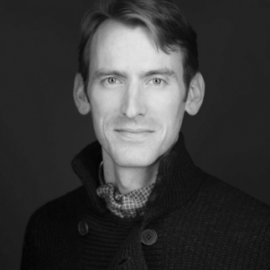


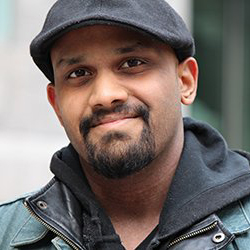
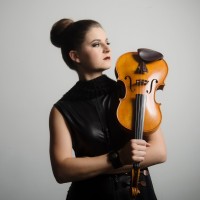
Starting from top left: Daniel Cabena, Hillary Tufford, Mireille Asselin, Danika Lorèn, Amahl Arulandandam, and Brenna Hardy-Kavanagh
Rather unconventionally for an opera, the music in this piece is written by not one composer, but two. Canadian composer Cecilia Livingston’s songs are woven in and around Translucence, a song cycle by English composer Donna McKevitt, which sets texts by Jarman himself. McKevitt worked with Jarman at the end of his life, scoring music for his final film, Blue (1993). While art song and opera are traditionally understood as separate entities in the world of classical singing, here they are one and the same. This act of recombination, of working with existing, disparate musical and textual material to create something new and cohesive, represents another way in which Albany and his creative team challenge the artistic conventions of opera, and open up a whole new arena of creative possibility in which to work and play.
How better to honour the life and work of a ground-breaking, boundary-pushing artist like Derek Jarman.